
I used to judge a good exercise day by how far I had walked. If I came home with warm calves, a damp shirt, and a decent number on my watch, I felt I had covered both fitness and muscle. Then ordinary household jobs exposed a gap. Carrying a full box up a short flight of stairs could make my thighs work harder than an hour on a familiar route.
That contrast changed what I pay attention to. Walking can leave me pleasantly tired without asking for much peak force, while a few awkward lifts or repeated rises from a low chair reveal strength immediately. That is the useful starting point for walking and sarcopenia prevention. Walking is valuable, but the body does not treat every kind of physical work as the same signal.
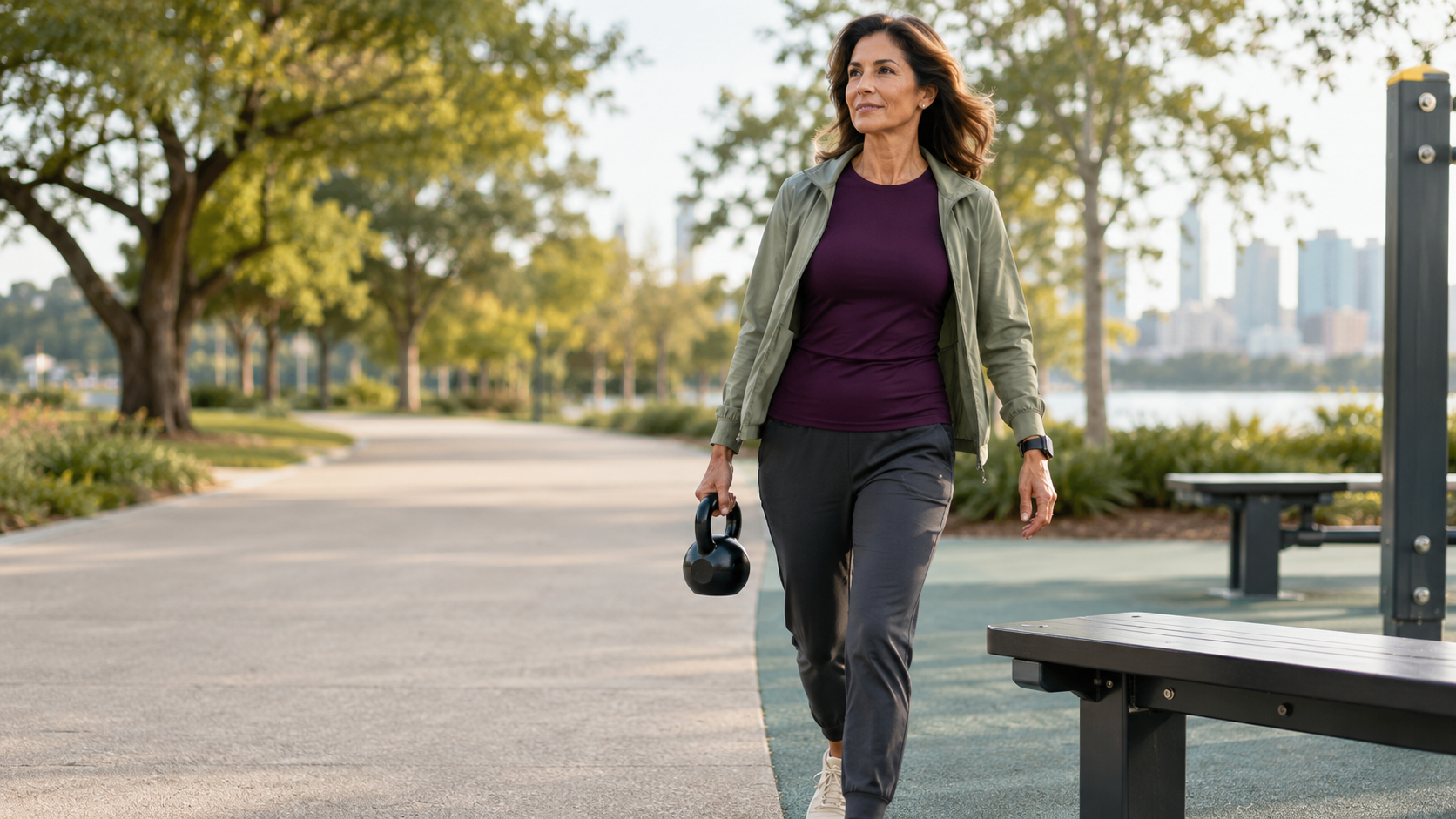
A Long Walk Can Coexist With Declining Strength
Sarcopenia is often reduced to “losing muscle with age.” The clinical picture is broader. Current diagnostic criteria place low muscle strength at the front of the assessment. Low muscle quantity or quality is used to confirm sarcopenia, while poor physical performance helps identify severe disease.
Muscle mass, strength, and physical performance are related, but they do not always change together.
Someone may still cover a familiar walking route while finding it harder to rise from a low seat, lift a suitcase, carry groceries, or recover from a stumble. Walking repeats relatively modest forces thousands of times. Those other tasks can demand much higher force for only a few seconds.
Daily life also offers quiet workarounds. Hands start pushing on armrests. A heavy bag gets split into two lighter trips. The elevator becomes more attractive. None of those changes proves sarcopenia, yet they can reveal losses that a step counter cannot see.
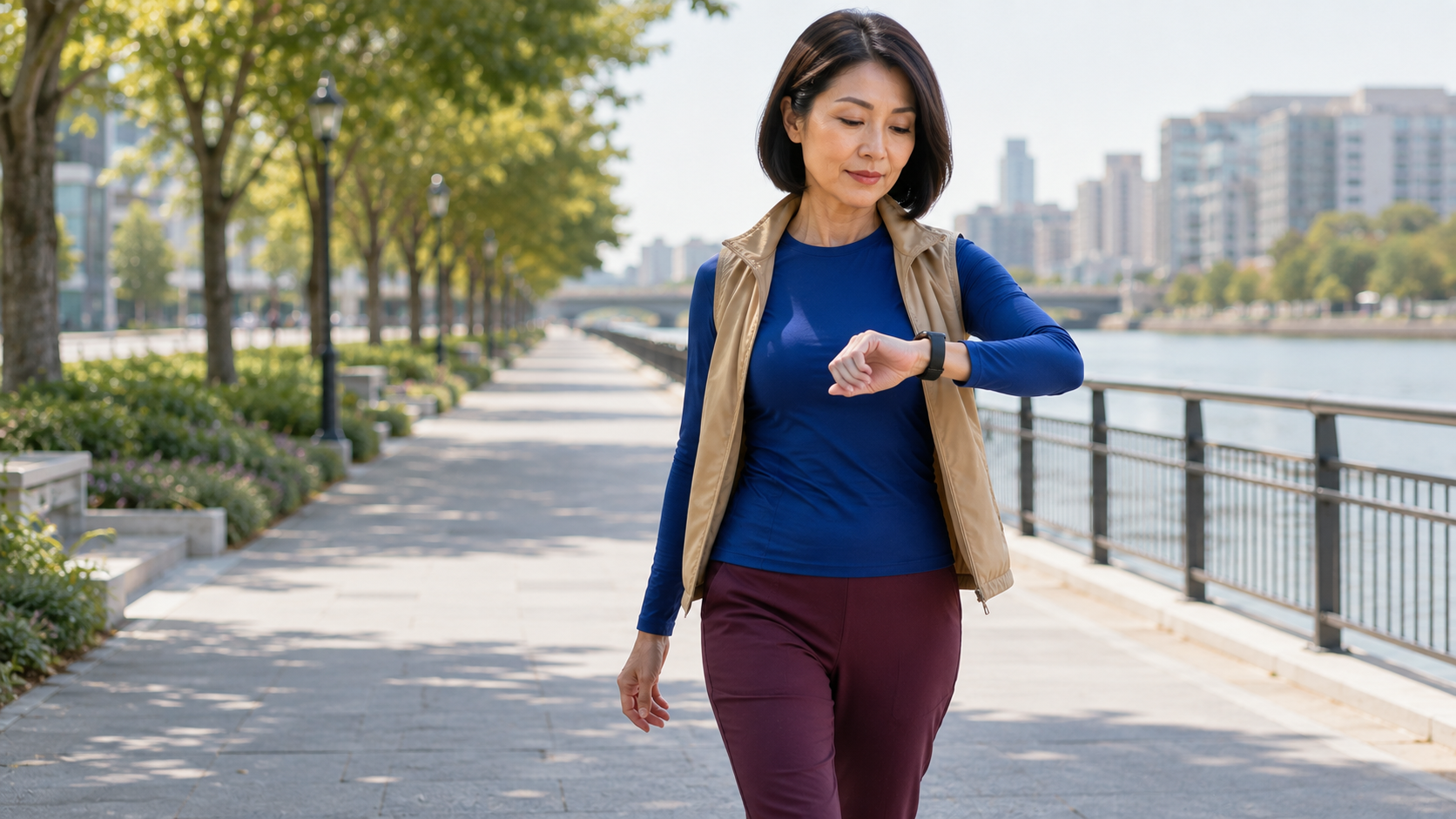
Steps Tell You About Movement, Not the Whole Muscle Story
Walking still earns its place in healthy aging. It keeps gait practiced, adds aerobic activity, reduces sedentary time, and loads the lower limbs repeatedly. For someone moving from inactivity to regular brisk walking, that can be a meaningful change.
In a yearlong observational study of 175 community-dwelling Japanese adults aged 65 to 84, muscle mass was associated with habitual physical activity. The relationship was stronger for time spent above 3 metabolic equivalents, or METs, than for step count alone. The researchers also found step and intensity ranges associated with lower odds of low muscle mass.
Those numbers are interesting, not prescriptive. The study was observational, measured muscle mass at the end of monitoring, and used a sarcopenia definition based on muscle mass rather than the strength-first framework used in current European criteria. It cannot establish a daily step threshold that prevents sarcopenia.
A small 2024 intervention shows the same need for caution from another angle. Twenty-six Chinese women older than 80 completed supervised moderate-intensity brisk walking three times a week for 12 weeks. Their 4-m gait speed, 30-second sit-to-stand performance, flexibility, and 2-minute step-test performance improved significantly. Appendicular skeletal muscle mass index did not. Grip strength rose slightly, but not significantly.
These women improved several aspects of physical function without a measurable gain in muscle mass. The study had no randomized control group and involved a small, specific population, so it cannot tell us whether brisk walking prevents sarcopenia across older adults generally.
There is also no validated number of daily steps that guarantees muscle preservation. Ten thousand steps may describe an active day; it does not describe how much force the muscles had to produce.
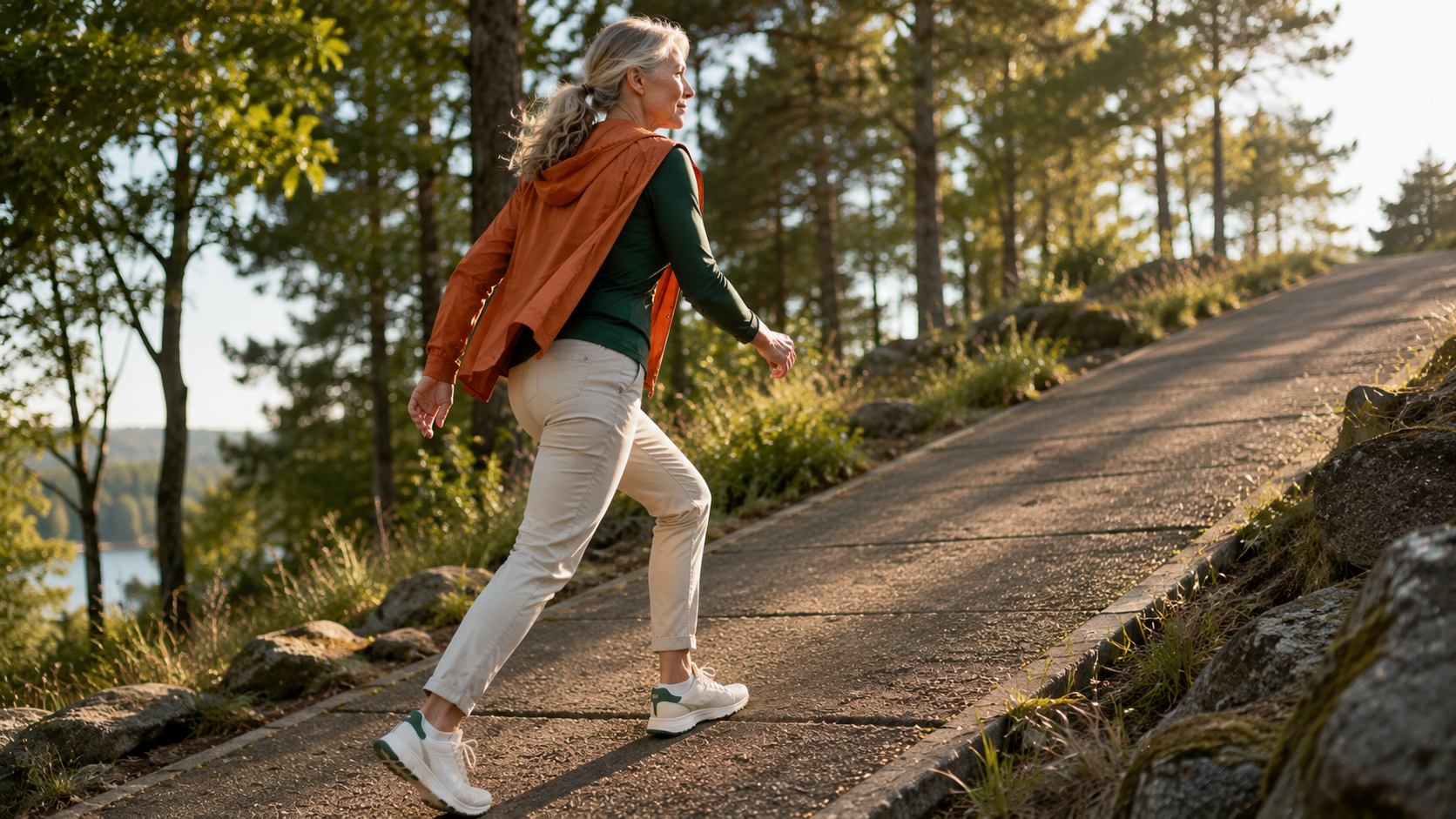
Why the Same Route Eventually Becomes Easier
The first week of a new walking routine may leave the legs noticeably tired. A few months later, the same route can feel automatic. That is adaptation.
Once the body becomes efficient at a familiar pace and terrain, adding more distance mostly increases the amount of the same task. Endurance may continue to benefit. The legs still work. What does not necessarily rise is the force demanded by each step.
This becomes obvious above the waist. Normal walking provides little progressive challenge for grip, pulling strength, pushing strength, the shoulders, or much of the upper back. Even in the legs, level walking generally asks less force than a hard sit-to-stand, squat, step-up, calf raise, or loaded hip-extension movement.
Hills and stairs change the equation somewhat. They increase lower-limb demand and can be especially useful when normal walking has become easy. Faster walking can also raise muscular and cardiovascular demands.
Still, a hill is not an adjustable weight stack. Once the legs adapt to the hill, the route is still the route.
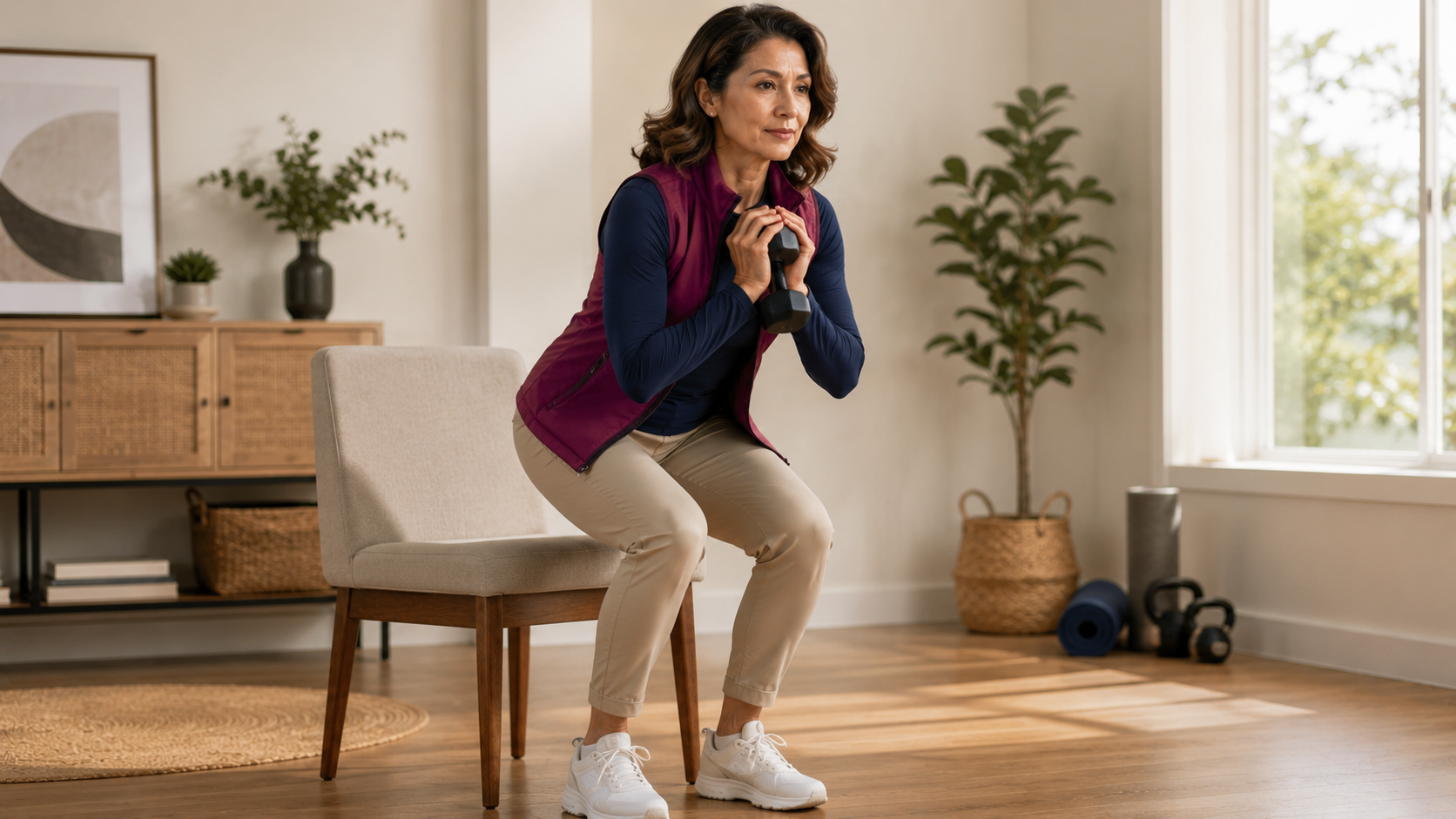
The Missing Stimulus Feels Different
A chair leg scrapes lightly across the floor as I set it in place. With a load held close to my chest, the first rise feels ordinary; by the last few repetitions, my thighs are working in a way they never do on a flat neighborhood walk.
That sensation is not proof of an effective program, but it illustrates the mechanical difference. Resistance exercise lets muscular demand be increased deliberately.
A sit-to-stand can be loaded. A resistance band can be replaced with a stronger one. A squat can become deeper or heavier. Rows, presses, calf raises, hip-hinge movements, step-ups, and carries can all be scaled. When the current version becomes easy, the exercise can change without requiring a steeper street or a longer route.
Recent evidence-based guidance strongly recommends resistance training alone, or multicomponent exercise that includes resistance training, to help prevent the onset and progression of sarcopenia in older adults. The certainty of evidence behind that recommendation was rated high.
There is no single perfect frequency or intensity for everyone. The intervention studies behind the recommendation varied substantially. What the evidence supports is resistance exercise as a category, not one universal workout.
Broader physical-activity guidance takes a compatible approach. Adults aged 65 years and older are advised to perform muscle-strengthening activities at moderate or greater intensity involving all major muscle groups on 2 or more days each week. Varied multicomponent activity emphasizing functional balance and strength is also recommended on 3 or more days each week.
Walking Versus Strength Training Is the Wrong Choice
For anyone wondering whether strength training versus walking is better for seniors, the useful answer is that they solve different problems.
Walking is hard to beat for accessible aerobic activity and repeated practice of locomotion. It can be done for transport, after meals, with friends, or simply because getting outside is enjoyable. Brisk pace, slopes, and stairs can make it more demanding.
Strength work covers what normal walking tends to miss. It can challenge the upper body, train grip, and expose the legs and hips to higher force. It also gives the person a way to progress once a movement becomes familiar.
A simple approach does not need a long exercise menu. One knee-dominant movement such as a squat or sit-to-stand, one hip-dominant movement, calf work, an upper-body push, an upper-body pull, and some carrying or grip work can cover a great deal. Machines, dumbbells, resistance bands, and body weight are tools rather than requirements.
The harder part is choosing a challenge that fits the person. Arthritis, balance problems, cardiovascular disease, neurological conditions, previous injuries, frailty, and long periods of inactivity can all change what is appropriate.
Weighted walking deserves the same caution. Adding a vest or backpack increases load, but it also changes fatigue, balance, and joint demands. Making a walk heavier does not automatically make it a better muscle-preservation strategy.
What Daily Life May Show Before a Step Counter Does
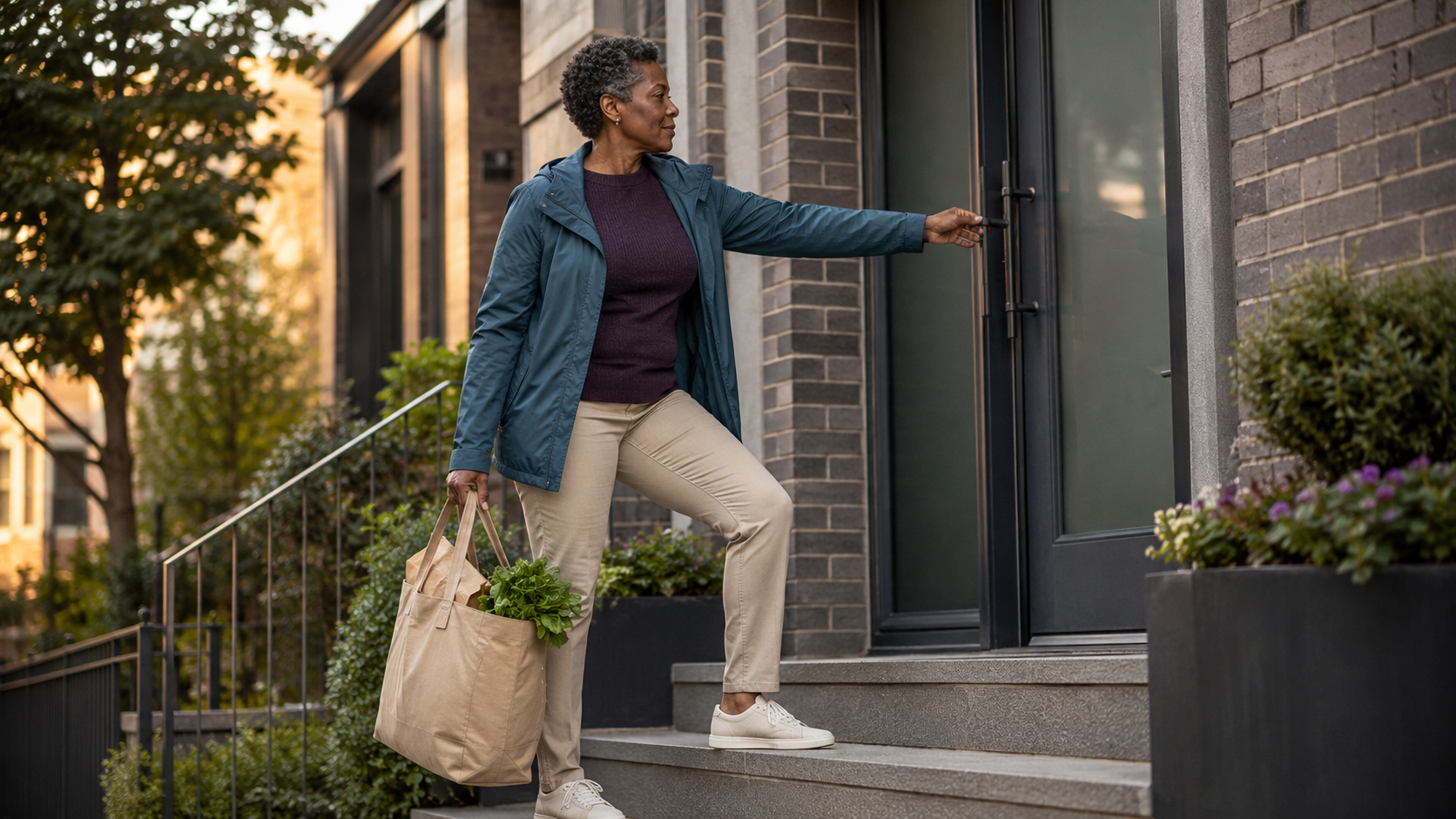
The signs worth noticing are often mundane. A chair seems lower than it used to. Grocery bags get swapped from hand to hand sooner. Stairs require more pulling on the rail. Getting down to the floor starts to feel like a decision because standing back up is uncertain.
A clear slowing of usual walking speed matters too. So do recurrent falls, marked weakness, unintentional weight loss, or a substantial decline after illness.
These observations cannot diagnose sarcopenia. Clinical assessment may include grip strength, repeated chair stands, gait speed, and measurements of muscle quantity, depending on the person and setting. What they can do is show when “I still get my steps” is no longer a sufficient description of physical capacity.
For someone trying to preserve muscle while aging, that distinction is more useful than chasing a larger number on a watch.
I still count walking as one of the best things I can do regularly. I just no longer count a long walk as proof that strength has been taken care of. If the route feels easy because I have become good at walking, that is a reason to keep the walk—and give my muscles another job.
Disclaimer
This article is for general educational purposes and is not a substitute for individualized medical diagnosis, treatment, or exercise prescription. Exercise capacity can be affected by cardiovascular disease, neurological conditions, joint disorders, frailty, medications, recent illness, and previous injuries. People with diagnosed sarcopenia, unexplained muscle or weight loss, recurrent falls, marked weakness, or significant medical conditions should seek guidance from an appropriate health professional before making major changes to exercise intensity or resistance training.
References
1. Cruz-Jentoft AJ, Bahat G, Bauer J, et al. Sarcopenia: revised European consensus on definition and diagnosis. Age Ageing. 2019;48(1):16-31. doi:10.1093/ageing/afy169.
2. Park H, Park S, Shephard RJ, Aoyagi Y. Yearlong physical activity and sarcopenia in older adults: the Nakanojo Study. Eur J Appl Physiol. 2010;109(5):953-961. doi:10.1007/s00421-010-1424-8.
3. Wang Y, Lu Y, Fang Z, et al. Brisk walking improves motor function and lower limb muscle strength in Chinese women aged 80 years and older. Sci Rep. 2024;14:7933. doi:10.1038/s41598-024-55925-6.
4. Ogawa S, Wakabayashi H, Suzuki N, et al. HQ9: do exercise interventions prevent the onset and progression of sarcopenia in older adults?: English translation of the Japanese Guideline for Digital Health for the Prevention and Improvement of Sarcopenia and Frailty. Geriatr Gerontol Int. 2026;26(suppl 1):71-73. doi:10.1111/ggi.70305.
5. World Health Organization. WHO Guidelines on Physical Activity and Sedentary Behaviour. World Health Organization; 2020.
'Wellness > Walking' 카테고리의 다른 글
| Is Walking Enough To Protect Bone? (0) | 2026.09.02 |
|---|---|
| Walking With Bunions Without Constant Irritation (0) | 2026.09.02 |
| Ankle Mobility Quietly Limits Your Walking (0) | 2026.09.02 |
| Step Length Reveals More Than Step Count (0) | 2026.08.29 |
| GPS Walking Pace Is Not Always Right (0) | 2026.08.29 |


Comments